




ICO study efficacy in radiotherapy
ICO Clinical Study
ICO HOSPITALET CLINICAL STUDY (Barcelona): efficacy of GGcare products in radiotherapy
AUTHOR:
Juan L. Ribes "coordinator of Radiotherapy Oncology Nursing Consultation" ICO Barcelona.
DURATION:
From January to December 2020.
INTRODUCTION:
The prevention and treatment of radiation-induced dermatitis is an unavoidable adverse effect. It can be minimized with nursing care and the use of appropriate products. This document presents a test to assess the effectiveness of GGcare products in detail.
HYPOTHESIS:
The combination of Soothing Body Cream and Relieving Repair Oil is a highly recommended protocol for the prevention and reduction of radiodermatitis in breast cancer.
METHODOLOGY:
Fourteen breast cancer patients undergoing onco-radiotherapy treatments were studied and divided into two subgroups: normofractionated (25 sessions of 50 Gy) and hypofractionated (15 sessions of 40.05 Gy). This division was made because skin reactions differ in their timing.

Results:
Normofractionated:
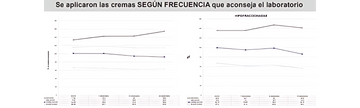
Elasticity : a loss of 2.8% from the beginning to the end of treatment. Average loss with other creams: 10%.
Hydration : loss of 5.66% from the beginning to the end of treatment. Average loss with other creams: 10-12%.
Melanin : 7.5% increase from the start to the end of treatment. Average increase with other creams: 12-18%.
Erythema : 22.08% increase from the beginning to the end of treatment. Average increase for other creams: 15-25%.
Hypofractionated:
Elasticity : 11.3% loss from the start to the end of treatment. Average loss with other creams: 10%.
Hydration : 2% loss from the start to the end of treatment. Average loss with other creams is 10-12%.
Melanin : 1.1% loss from the start to the end of treatment. Average increase with other creams: 12-18%.
Erythema : 20% increase from the start to the end of treatment. Average increase with other creams: 15-25%.
Discussion:
Different reactions are observed between normo and hypo. This is due to the difference in dosage per session. Loss of elasticity increases in hypo; however, it offers better protection against moisture loss and a good aesthetic result due to the low melanin production. The reaction regarding erythema is very similar.
Conclusions:
- Excellent results in both normofractionated and hypofractionated fractions. In most of the measured parameters, it performed better than the majority of creams evaluated. This reaffirms our hypothesis that the combination of Soothing Body Cream and Relieving Repair Oil is a highly recommended protocol.
- Note: The use of the Soothing Repair Oil should not be applied before treatment to avoid a bolus effect.
Presentation and conclusion:
- Unlike other valuation studies, this one is based on objective measures.
- Four essential parameters are assessed in the skin, which are highly recommended in onco-radiology.
- As the photos of the patients in the study show, the skin reacts in a very mild-to-moderate way.
NORM FRACTIONAL
-
Elasticity: a loss of 2.8% from the beginning to the end of treatment. Average loss with other creams: 10%.
ASSESSMENT: The typical loss of elasticity with RDT treatment is much lower than with other creams. The positive response is related, in the medium term, to regaining baseline elasticity as quickly as possible. -
Hydration: loss of 5.66% from the beginning to the end of treatment. Average loss with other creams: 10-12%.
ASSESSMENT: It is very interesting that the loss of hydration is less to avoid Grade 2 scaling. -
Melanin: 7.5% increase from the start to the end of treatment. Average increase with other creams: 12-18%.
ASSESSMENT: Melanin production always increases from the second half of treatment onward, and this increase is greater in skin types III-IV due to increased melanocyte activity. Excessive melanin growth leads to hyperpigmentation, and these spots take a long time to resolve. Therefore, even a small increase is considered beneficial. -
Erythema: 22.08% increase from the start to the end of treatment. Average increase with other creams: 15-25%.
ASSESSMENT: In this case, the increase is very similar to the other creams. This is an unavoidable effect caused by increased vascularization. The most important thing is to maintain Grade I and prevent flaking. This is achieved with good hydration control.
HYPOFRACTIONATED
-
Elasticity: 11.3% loss from the beginning to the end of treatment. Average loss with other creams: 10%.
EVALUATION: The difference in reaction between normal and hypo is marked. Very similar to other creams. -
Hydration: 2% loss from the start to the end of treatment. Average loss with other creams is 10-12%.
ASSESSMENT: It is very interesting that the loss of hydration is less to avoid Grade 2 scaling. -
Melanin: losses of 1.1% from the beginning to the end of treatment. Average increase with other creams 12-18%.
ASSESSMENT: Melanin levels always increase from the second half of treatment onwards, and this increase is greater in phototypes III-IV due to increased melanocyte activity. Excessive melanocyte growth produces
Hyperpigmentation of the skin and these spots take a long time to heal aesthetically. That's why the
excellence of the small increase. -
Erythema: 20% increase from the start to the end of treatment. Average increase with other creams: 15-25%.
EVALUATION: In this case, the increase is very similar to the other creams. An inevitable effect that occurs
due to increased vascularization. The important thing is to stay at Grade I and avoid scaling with good [skin care/skin care].
hydration control.
DIFFERENCE BETWEEN NORMO AND HYPO
- Normo-fractional treatments: the maximum significant reaction occurs in the last sessions and a few days later.
- Hypofractionated treatments: the major reaction occurs 1 week after completion.
In both cases, the good data provided by the protocol is very important, specifically regarding hydration; avoiding flaking and minimizing increases in melanin for aesthetic purposes.
Note: It is advisable to maintain the same care for the following 15-20 days.
PRODUCT APPLICATION GUIDELINES
- Purifying soapy oil : Use as a normal shower gel, or even as shampoo. Essential for radiotherapy in the intimate area.
- Soothing body cream : Apply twice a day. In case of itching, redness, and extreme dryness, apply as needed.
- Soothing and repairing oil: Apply 3 times a day. Important: Apply immediately after the radiotherapy session, never before. The skin in the treatment area must be clean of any product before the session.